TSMC Cuts TMAH Effluent, Protecting the Environment while Boosting Efficiency

.png)
TSMC (Nanjing) collaborated with suppliers to optimize its TMAH wastewater treatment system by utilizing strong acid cation exchange resin (SAC) with a top-inlet configuration, while upgrading control programming and adjusting hydrochloric acid parameters. After 2.5 years of practical operation, the resin's lifespan has been successfully extended from eight to 30 months and the concentration of regenerated TMAC was increased. This achievement has yielded an annual reduction of 387 metric tons of waste liquid and a cost savings of approximately NT$16.7 million, demonstrating TSMC's concrete actions to practice responsible production and raise the value generated from its resources.
------------------------------
In response to the United Nations Sustainable Development Goals (SDGs) 12 – Responsible Consumption and Production, TSMC continues to improve wastewater treatment and waste reduction efficiency. TSMC (Nanjing) collaborated with suppliers to enhance the system performance of its tetramethylammonium hydroxide (TMAH) wastewater treatment system by using strong acid cation exchange resin (SAC) with a top-inlet configuration and optimizing hydrochloric acid concentration and dosage. After 2.5 years of practical operation, the resin's lifespan was extended from eight to 30 months, while the regenerated TMAC concentration increased from 10% to 12.3%. This achievement has yielded an annual reduction of 387 metric tons of TMAC waste liquid and a cost savings of approximately NT$16.7 million, delivering both environmental and operational value.
Enhancing Resin Adsorption Efficiency: A Further Evolution of Green Manufacturing Processes
TMAH is a key chemical utilized in semiconductor photolithography process. The tetramethylammonium cations (TMA+) in wastewater are adsorbed by resin tower and then desorbed by hydrochloric acid to convert into TMAC liquid waste. In line with its commitment to environmental sustainability and reducing waste, the TSMC (Nanjing) facility department partnered with suppliers in 2024 to upgrade the system's control programming, which has integrated automated air scouring and backwashing functions into the resin towers. Concurrently, by conducting a comparative performance analysis of strong and weak acid cation (WAC) resins, the adsorption workflow was successfully optimized, leading to a 99% pollutant removal rate and a 200% expansion in system treatment capacity. In addition, by testing and adjusting the operational parameters for hydrochloric acid concentration and dosage, the concentration of recovered TMAC was further increased, delivering a twofold success of waste minimization and cost reduction.
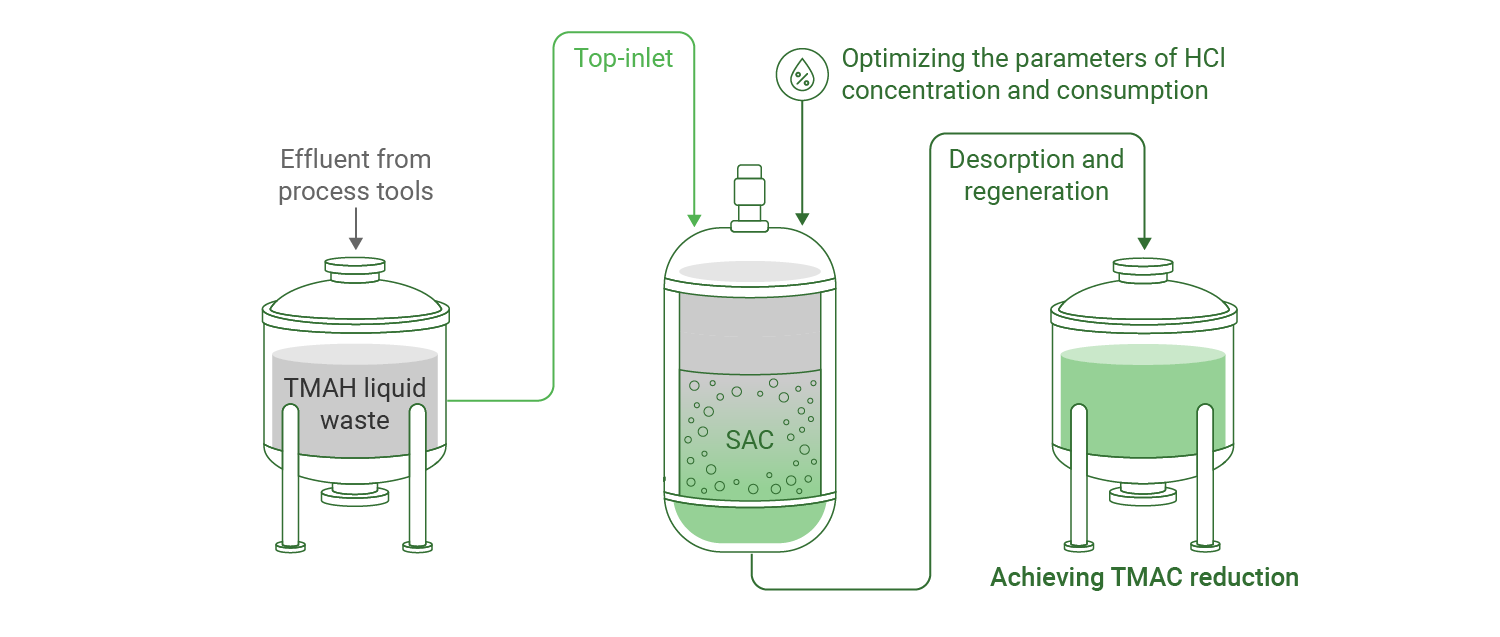
Dedicated to increasing the value of resource utilization, TSMC follows the principles of ”minimizing waste generation, maximizing resource circulation, and optimizing supplier management.” The Company will continue to drive the upcycling of liquid waste and collaborate with suppliers to jointly realize environmental benefits, adding greater green momentum into the semiconductor industry.
- What is Tetramethyl Ammonium Hydroxide (TMAH)?
TMAH, a highly alkaline aqueous solution, is the most extensively used chemical in the semiconductor photolithography process. During this process, photoresist in the exposure area reacts to generate photoacids, which undergo an acid-base reaction with TMAH to complete the development process. The pattern of the layer is then finalized by rinsing with ultrapure water.
- What is United Nations Sustainable Development Goals (SDGs) Goal 12?
The 12 goals set forth by the United Nations urge collaborative efforts from governments, industries, and academia worldwide to achieve sustainable development across social, economic, and environmental dimensions by the year 2030. SDGs 12 focuses on "ensure sustainable consumption and production patterns."
Stay Connected
Subscribe to our newsletter for the latest updates and explore sustainability with us.
This site is protected by reCAPTCHA and the Google Privacy Policy and Terms of Service apply.