TSMC's Make-Up Air Unit Scrubbing Tech 2.0 Cuts Power Consumption by another 60%


Committed to advancing green manufacturing, TSMC has successfully upgraded its Make-up Air Unit (MAU) scrubbing technology. The new design utilizes gravity-fed water flow instead of pump pressurization, achieving an additional 60% reduction in electricity use while keeping the same cleaning performance. This upgrade has been verified at Fab 6 and Advanced Backend Fab 7, and will be deployed across all 12-inch fabs in the future, driving TSMC's low-carbon sustainable transition through diverse energy-saving initiatives.
---------------------
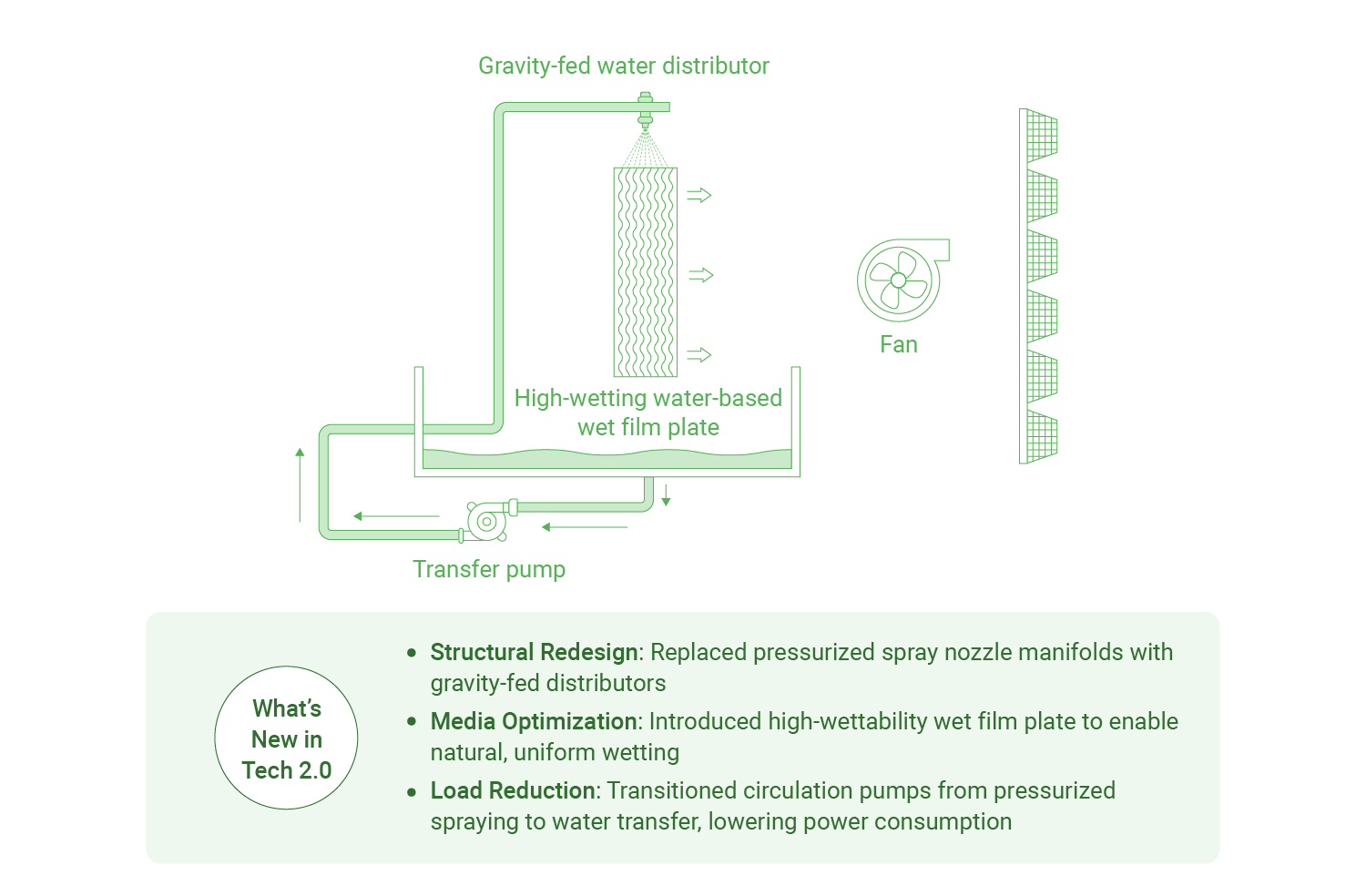
Guided by the vision of United Nations Sustainable Development Goal 7 (SDG 7), "Affordable and Clean Energy," TSMC proactively drives energy efficiency. The Company targets a 7.5% cumulative energy saving rate from 2026 to 2030 through new initiatives, and tracks progress in its annual sustainability reports. To maximize these savings, TSMC launched the "Unleashing the Energy-Saving Potential of Make-up Air Units" program, an award-winning project from the TSMC ESG AWARD. Partnering with suppliers, TSMC upgraded its MAU scrubbing tech 1.0, which already provided 80% energy savings, to MAU scrubbing tech 2.0. By retrofitting the MAU spray system with high-wettability wet film plates, the new technology utilizes gravity-fed water flow instead of pump pressurization. While maintaining the same cleaning performance, this upgrade reduces pump power from ten horsepower to four horsepower, achieving an additional 60% in inherent energy savings. As of October 2026, MAU scrubbing tech 2.0 has completed operational verification at Fab 6 and Advanced Backend Fab 7. It will be deployed across all 12-inch fabs to strengthen green manufacturing capabilities.
From Pressurization to Gravity: A Breakthrough in Scrubbing Technology
In cleanroom operations, the MAU removes micro-pollutants using wet film plates. TSMC's previous MAU scrubbing tech 1.0 replaced high-pressure atomizing nozzles with wet film absorption, expanding the gas-water contact area to achieve an initial 80% energy savings. To drive further efficiency, TSMC collaborated with suppliers on MAU scrubbing tech 2.0, shifting the focus from material optimization to a redesign of the mechanism.
The new design replaces pressurized nozzle racks with gravity-fed water distributors. By utilizing hydrostatic pressure from gravitational potential energy, the scrubbing water flows naturally and evenly saturates the wet film plates, upgrading the process from pressurized to gravity scrubbing. As a result, the circulation pumps were changed from pressurized spraying to simple water transfer, effectively lowering operating pressure and power consumption. In addition, the team calculated and verified the optimal water flowrate and wet film thickness based on the properties of airborne molecular contaminants (AMCs). Leveraging the plates' high hydrophilicity, the system ensures excellent filtration and removal of micro-pollutants.
In addition to upgrading MAU wet film scrubbing technology, TSMC is evaluating the introduction of low-pressure drop polytetrafluoroethylene (PTFE) filters. Compared to conventional glass fiber filters, these advanced alternatives reduce operating pressure drop by 50% and feature a high dust-holding capacity that extends replacement cycles. Through dual optimization of water scrubbing and air filtration, TSMC aims to minimize MAU energy consumption, fulfilling its commitment to green manufacturing through a wide range of environmental initiatives.
- What is Inherent Energy Savings?
Inherent energy savings refers to the structural optimization of equipment and systems at their source. It enables natural, continuous, and self-sustaining reductions in energy consumption without the need for manual management or operational adjustments.
- What is Gravitational Potential Energy?
Gravitational potential energy refers to the energy stored in water when it is pumped to an elevated level. As the water flows downward, this stored energy converts into hydrostatic pressure, driving an even distribution of water without requiring any electricity for additional pressurization.
Stay Connected
Subscribe to our newsletter for the latest updates and explore sustainability with us.
This site is protected by reCAPTCHA and the Google Privacy Policy and Terms of Service apply.